

The Active Recovery Advantage
What is Vestibular Therapy?
Vestibular therapy is a specialized form of physical therapy designed to rehabilitate the inner ear and its connections to the brain. When your vestibular system—the “internal GPS” located in your inner ear—is damaged or sending faulty signals, the brain becomes confused, leading to vertigo, dizziness, and imbalance.
Unlike medications that merely mask symptoms by “dampening” your senses, vestibular therapy uses targeted, neuroplasticity-based exercises to retrain your brain. By strategically exposing the system to controlled movements, we help the brain learn to ignore “noisy” signals and rely on healthy sensory pathways. At Neubility, we identify the exact mechanical or neurological driver of your dizziness to recalibrate your spatial orientation and return you to a life in focus.
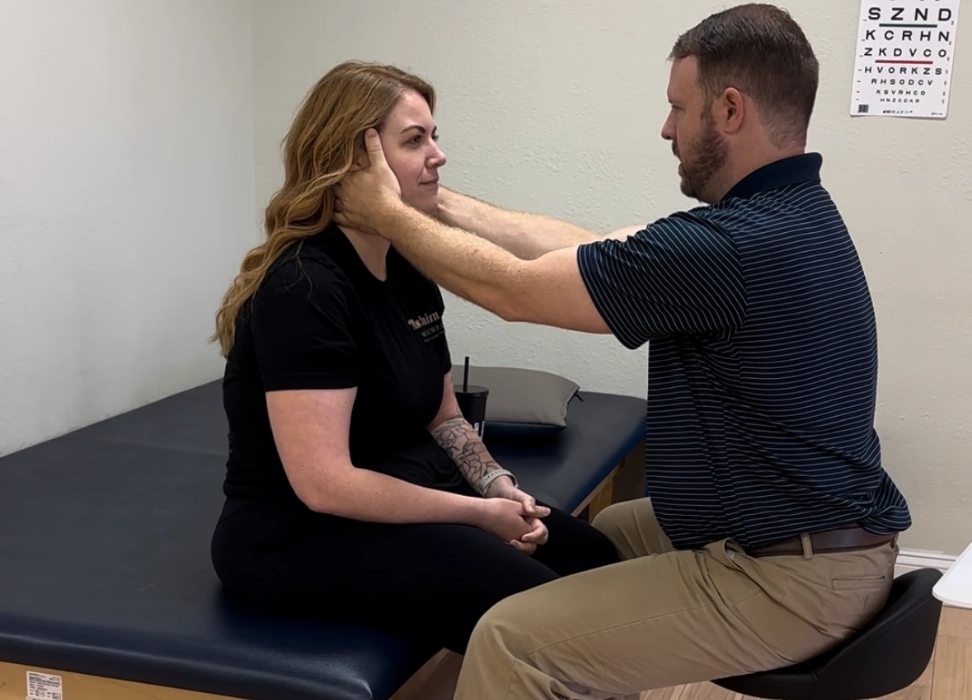
For example: Maria felt like the room was spinning every time she rolled over in bed or looked up at a high shelf. This sensation, known as BPPV, was caused by tiny “crystals” that had become dislodged in her inner ear. Her therapist, Dr. Han, performed a specialized diagnostic maneuver to confirm which ear canal was affected. He then guided Maria through a series of precise head movements called “Canalith Repositioning” to move the crystals back where they belonged. By the end of her first session, the spinning had stopped. To ensure she stayed stable, Maria then practiced gaze-stabilization exercises, allowing her to drive and shop again without the fear of a sudden dizzy spell.
Who Can Benefit?
Millions of people struggle with balance disorders that make simple tasks feel dangerous. Our vestibular programs successfully treat:
-
BPPV: Positioning-induced spinning caused by dislodged inner ear crystals.
-
Vestibular Neuritis: Sudden, severe vertigo and nausea from nerve inflammation.
-
Ménière’s Disease: Fluid buildup causing vertigo, tinnitus, and hearing fluctuations.
-
Migraine-Related Dizziness: Vertigo and “off-kilter” feelings triggered by vestibular migraines.
-
Concussion & Brain Injury: Dizziness following head trauma or stroke.
-
General Imbalance: Seniors or individuals with a high risk of falls and motion sensitivity.
How Can Vestibular Therapy Help?
RAPID SYMPTOM REDUCTION
Targeted maneuvers and habituation exercises significantly decrease the intensity and frequency of vertigo episodes, often providing relief where medication fails.
GAZE STABILIZATION
We use specific eye-movement drills to resolve vision disturbances (oscillopsia), ensuring your vision stays clear and steady even when your head is moving.
RECALIBRATED BALANCE & GAIT
By retraining your dynamic standing reactions—often using foam surfaces or multi-tasking drills—we build the self-assurance needed for walking in the community or driving.
FALL PREVENTION
We address the “root causes” of disequilibrium, identifying sensory mismatches before they lead to injury, helping you stay upright and independent in your home.
MOTION DESENSITIZATION
For those who feel dizzy in cars or busy environments (like grocery stores), we use controlled sensory exposure to help the brain filter out overwhelming visual “noise.”
RESTORED CONFIDENCE (ADLs)
Our ultimate goal is to remove the “fear of falling.” By rebuilding your internal spatial hardware, you can return to housework, social functions, and hobbies without limitation.